

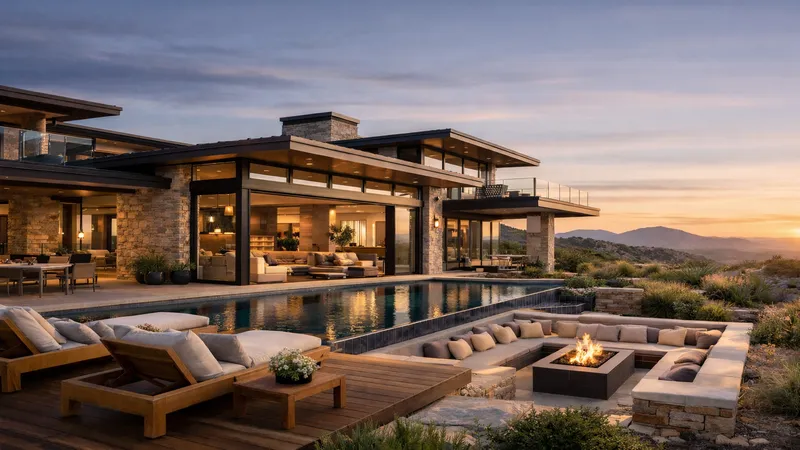
Building a modern custom home in 2026 means more than striking aesthetics and luxury finishes. Today’s homeowners aren’t simply seeking visual appeal, they’re prioritizing durability, adaptability, health, sustainability, and future relevance. In a world where lifestyles evolve quickly, future-ready custom homes are designed to last, perform, and increase in value, making longevity the defining theme of custom home design trends 2026.
Contrary to past cycles that favored temporary style flashes, 2026’s premium custom home movement is about lasting quality, from architecture and materials to smart systems and wellness spaces.
In this detailed guide, we’ll explore the key elements shaping premium custom homes and why top custom home builders are shifting their focus toward resilient design that stands the test of time.
In 2026, the purpose of home design is expanding beyond comfort and curb appeal. Today’s affluent buyers want homes that improve wellbeing, minimize maintenance, respond to climate challenges, and adapt as lifestyles evolve. This shift isn’t just aesthetic, it’s strategic.
Longevity in custom home planning is about anticipating the future while delivering comfort today, a principle at the core of future-ready custom homes and custom home design trends 2026.
Gone are the days of rigid layouts that serve one purpose. The modern custom home blends multifunctionality with intentional design.
Premium homeowners increasingly request adaptable rooms that can shift as needs change, such as:
This focus on flexibility isn’t a fad, it’s an investment in long-term functionality, enabling homes to adapt as demographics, work styles, and family needs evolve.
One of the standout premium custom home design trends homeowners want is biophilic design, the intentional blending of nature and architecture. This goes beyond plants in planters: it means designing homes with direct connections to the physical environment.
Biophilic design supports mental clarity, reduces stress, and creates a sense of harmony between indoor spaces and the landscape. For luxury buyers, this trend elevates wellbeing and stands the test of time.
Technology in future-ready custom homes isn’t about flashy displays, it’s about intelligence that supports daily life unobtrusively.
Leading custom home builders report that 2026 designs focus on systems that:
The age of visible smart panels and tangled tech cords is giving way to concealed intelligence, technology that performs without distracting from design.
2026 design thinking emphasizes materials that age gracefully and endure daily life, aligning with longevity as a core value.
High-performance forever materials include:
This shift reflects the understanding that beauty and permanence are not mutually exclusive: materials that improve with age help ensure the home remains relevant and high-value years down the road.
Wellness isn’t a room feature, it’s a design philosophy. Today’s luxury homeowners view their residences as sanctuaries that support mental and physical health.
These aren’t superficial add-ons, but integrated systems that contribute to healthy living, a critical aspect of longevity-focused homes.
Blurring the boundaries between interior and exterior space isn’t new, but in 2026 it’s perfected. Retractable glass walls, climate-controlled patios, and integrated landscapes are now integral components of modern custom homes.
Why It Matters
Such designs extend living space, maximize natural light, and enhance comfort throughout the year. They also foster deeper connections with the environment, another longevity-oriented benefit that also raises resale desirability.
Design for longevity also means designing with restraint.
Instead of chasing fleeting fads, 2026 interiors balance heritage and innovation, an approach often called “quiet luxury.” Hallmarks include:
This aesthetic ensures homes remain elegant and relevant over decades, an essential trait for premium custom home design trends in 2026.
In 2026, custom home design trends are no longer constrained to looks alone. Longevity, wellness, sustainability, and adaptability are at the heart of what affluent homeowners now value. Modern custom homes are expected to be:
For builders, designers, and homeowners alike, the message is clear: longevity is the new luxury. Homes that anticipate change, support wellbeing, and adapt gracefully to future needs are the ones that will stand the test of time.
Designing a future-ready custom home isn’t just about following trends, it’s about making smart, lasting decisions that stand the test of time, technology, and lifestyle changes. That’s where Nortex Construction comes in.
As trusted custom home builders in Dallas and North Texas, we specialize in crafting premium homes designed for longevity, performance, and timeless luxury. From thoughtful planning and future-proof design to high-quality materials and expert execution, our team guides you through every step with clarity and confidence.
If you’re planning a modern custom home that’s built for the way you’ll live tomorrow, let’s start with a conversation.
📞 Call us: (972) 737-3253
👉 Schedule your consultation today and take the first step toward a premium home that’s truly built to last.
1. What is the main difference between design-build and traditional construction?
Design-build combines design and construction into one team, while traditional construction separates the designer and builder.
2. Is design-build more expensive for luxury homes?
Not necessarily. It often reduces costs by minimizing change orders and miscommunication during construction.
3. Can I customize my home in a design-build process?
Absolutely. In fact, design-build for luxury homes is highly flexible and adapts to custom features and upgrades.
4. How long does a design-build luxury home project take?
It varies, but overlapping design and construction phases usually shorten timelines compared to traditional methods.
5. Are traditional construction methods still used for premium homes?
Yes, but many custom luxury home builders now prefer design-build for efficiency, communication, and seamless execution.
View all

February 14, 2026 | by Nortex Construction
January 19, 2026 | by Nortex Construction
January 27, 2026 | by Nortex Construction